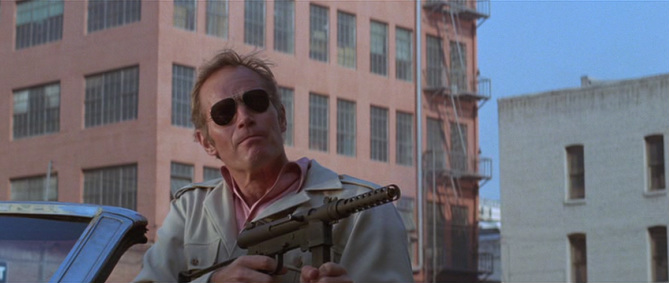
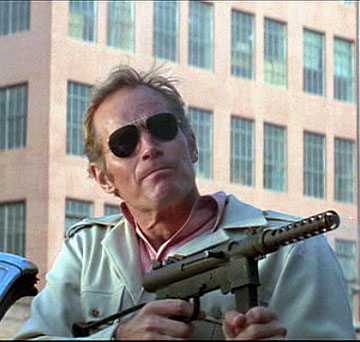
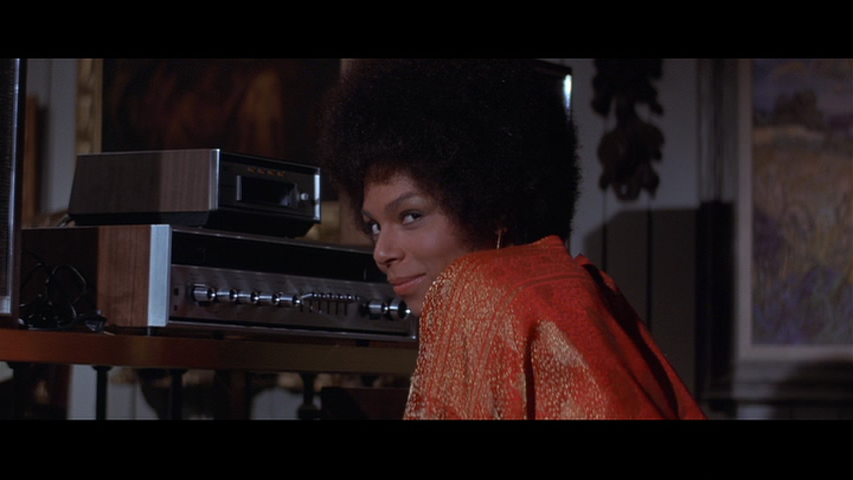
 "One creature, caught. Caught in a place he cannot stir from, in the dark...alone, outnumbered hundreds to one, nothing to live for but his memories, nothing to live with but his gadgets, his cars, his guns, gimmicks..." The end-of-the-world thriller is a common one in science fiction, and it's proven a popular one in film. The current obsession with zombies is just the latest phase of this fascination with this “what if” scenario. The post-apocalyptic genre offers immediate dramatic impact; the viewer can't help but get caught up in the game of “what would I do in such a drastic situation?” As early as 1959's The World, the Flesh and the Devil and 1962's Panic in Year Zero, filmmakers have been inspired by the dramatic and visual possibilities inherent in the genre. We humans seem endlessly intrigued by the idea of the eventual decline of civilization and the decimation and eradication of our species from an indifferent planet. 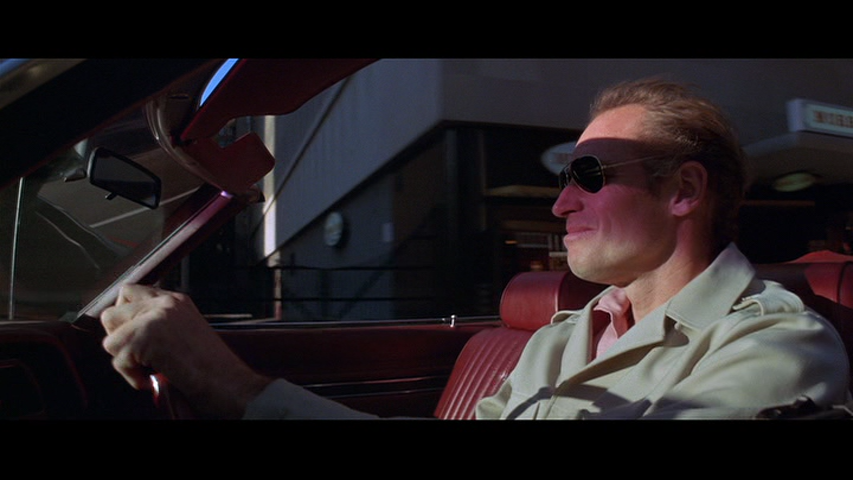 There have been all manner of post-apocalyptic movies, some straight-up adventures (The Road Warrior), some philosophical character studies (The Quiet Earth), bleak horror (Dawn / Day of the Dead), poignant ruminations on the end of all things (The Road) or man's descent into animalistic savagery (No Blade of Grass). I like nearly all of these films, and love many. I'm guess I'm just predisposed to enjoy a good end-of-the-world yarn. The Omega Man may not be the best example of its genre, but it's certainly one of the most entertaining. Charlton Heston stars as Robert Neville, military scientist and, seemingly, the last man on Earth. As a virulent plague begins wiping out humanity, Neville engineers a possible vaccine. Surviving a helicopter crash, but beginning to feel the effects of the plague, he injects himself with the last intact vial of serum. As a result, he becomes immune to the disease. As civilization crumbles around him, he holes up in his penthouse apartment and barricades himself in with the paintings, books, and other last remnants of a dying culture. 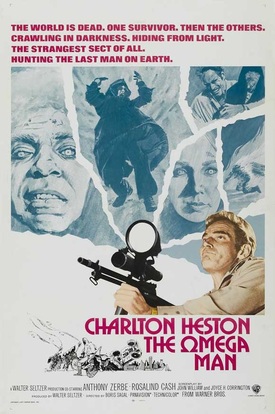 Not all humans immediately succumbed to the plague; some have changed, mutated into albinos who can't abide light. This slowly-dying new breed of humans has gathered into a hooded, black-robed group calling itself “the Family,” organized and led by former newscaster turned cult leader, Mathias (Anthony Zerbe, in a eerily calm, mesmerizing performance). Matthias and his “Family” despise and destroy all technology, anything that signifies the machines of the past that have led to their current plight. By proxy, Neville has become their hated nemesis, and by night, they lay siege to his “fortress.” By day, he hunts the litter- and corpse-strewn streets and buildings looking for the mutants' “nest,” determined to wipe them out for once and all. The first (and by far the most powerful) half of the film establishes this world and Neville's lonely routine as he copes with not only the mental strain of his isolation, but the dangers imposed by the Family. The film has a truly effective opening that grips from the first frame, as we see Neville driving a convertible around the deserted streets of Los Angeles. Suddenly, Neville slams on the brakes, whips up a submachine gun and, spying a dark figure lurking within, sends a hail of bullets flying into the windows of a nearby building. Next, we see him take a corner too hard and mess up the suspension on his ride...so he casually walks up the road to a car dealership and grabs a new one, all the while keeping a running one-sided conversation with the rotting corpse of a salesman slumped behind his desk. “How much for a trade-in on my Ford? Oh, really? Thanks a lot, you cheating bastard...” Despite the bravado, its plain that Neville still reels from the shock of being surrounded only by the dead or dying. He then enters a movie theater, fires up the projector and watches Woodstock, the way he mouths all the words by heart showing us he's done this many times before. Watching this ultimate expression of a communal experience on film is the closest he can come to feeling like he's back among people, a little taste of what things were once like in a world now long gone. Coming out of the theater, he realizes he's waited too long: the sun is setting and soon, the Family will be out in full force. He speeds home and as darkness falls, barely makes it into his garage before his car is firebombed and he's attacked by several mutants. He dispatches his assailants but it's a close-run thing. A little shaken, he starts up the massive generator that powers his apartment building. As he does so, numerous floodlights on the outside of his building send the gathered Family members scurrying for the shadows. Secure in his bunker, Neville rides the elevator up to his floor and enters his sanctum, filled with all the technology and culture he can cram in. He changes into dinner attire, pours himself a glass of wine and continues his chess match with a bust of Caesar he keeps on his table. But his carefully designed routine and civilized armor is continuously punctured by the taunts and screams of the Family outside. “Nevillllle...Nevillllle...” 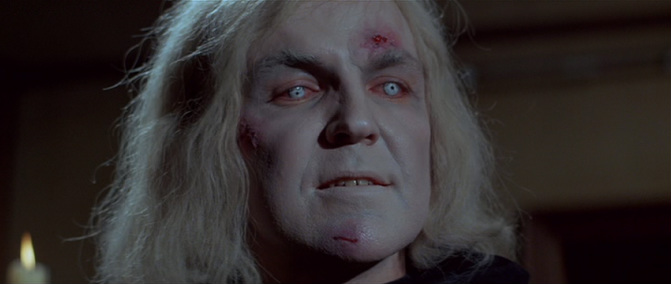 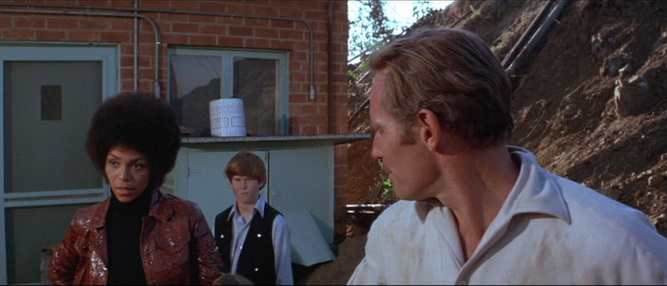 Neville's tenuous existence is rocked one day when, trying on clothes in an abandoned sporting goods store, he spots an attractive young black woman, Lisa (Rosalind Cash), who runs away before he can talk to her. Events lead to his meeting Lisa again, and he finds out she's living beyond the city limits with a group of uninfected (so far) children and one other adult, a former medical student named Dutch (Paul Koslo). When Neville expresses surprise that this group of survivors appears clean, Dutch explains: "You've only seen the tertiary cases, Matthias and his people. We're not as far gone, but we're on the road." Lisa's younger brother Ritchie has started to “turn," and Lisa hopes Neville, with his resistance to the disease, can help. Soon, Neville has installed Lisa and Ritchie in his apartment and, through a series of transfusions, manages to heal the boy. Neville and Lisa soon become intimate, and the re-energized Neville starts packing up necessary equipment for a planned relocation to the relative peace of the mountains with Lisa, Dutch and the kids. But the idealistic and naïve Ritchie, who feels the cure should be shared with Matthias and his people, heads off on a fateful encounter with the Family, Neville in frantic pursuit... The Omega Man was the second of three attempts to bring Richard Matheson's seminal novel I Am Legend to the screen. A miscast Vincent Price as Neville contended with vampiric mutants in perhaps the most faithful adaptation, the occasionally atmospheric but rather cheap Italian production, The Last Man on Earth (1964). Decades later, superstar Will Smith took his turn as Neville in I Am Legend (2007). The Smith film has a pretty terrific opening, but goes quickly down the tubes in its second half, and is severely damaged by its unrealistic, too-quick-moving CGI monsters. While none of the three versions really do justice to the novel, taken as pure cinematic entertainment, The Omega Man emerges as the superior film.
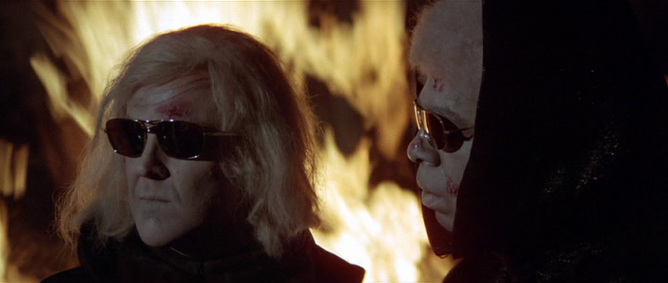 An aging but still very fit Charlton Heston is an ideal choice as the lone alpha-male holdout for the human race. I know a lot of folks have a hard time separating an actor's politics from his or her film persona. Many people can't see past Heston's late-life NRA leanings to watch and enjoy any of his films. I say it's their loss. Heston was one of those rare actors who are able to realistically embody larger-than-life characters on film, while bringing to these iconic parts a deeply-felt, flawed humanity. A man of immense gravitas on screen, Heston was by all accounts a man of principle and honor in his real life, as well. The Omega Man was the middle of a fascinating trifecta of bleak, dystopian sci-fi films which started with 1968's Planet of the Apes and ended with Soylent Green (1973). All films with clear liberal political themes, anchored by his square-jawed, powerhouse presence. This to me indicates a more complex set of personal politics than is often ascribed to Heston (though his critics might correctly note his proficient wielding of guns in each of these films). None of this really matters in the end; Heston is Grade A superstar material and handily carries nearly every scene in The Omega Man. While it remains a pacy, suspenseful and endlessly watchable sci-fi adventure, The Omega Man has some definite flaws. While Zerbe is a great foil for Heston, I would have preferred the mutants be more frightening in design and execution. As it stands, they're basically just random people in white pancake make-up, sporting freaky contacts and bad skin blemishes. Why the producers went this route, I'm not sure. It was undoubtedly a cheaper option. It may also have seemed more fresh for them to go with plague victims as the chief baddies, after over a decade of Hammer vampire shenanigans. Not to say that an imaginatively-reworked concept of vampires wouldn't have been more successful in the long run. Matthias and company simply aren't scary enough, that's for sure, but I still find them interesting, anti-establishment villains in sociological contrast to Heston's old-fashioned authority figure. 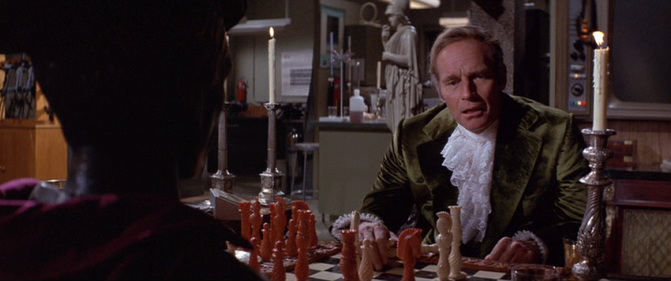 Some will find the direct links to 1970s counterculture and other sociological issues of the time glaring and dated. I personally think they add an interesting element to the film; movies are products of their time, after all, and, in my opinion, should be judged in context. Rosalind Cash is really the film's main liability; she's a striking physical presence, all lithe body, big Afro and Black Power attitude. But her line readings are stiff, her blaxploitation manner forced, and her “Hey, honky” dialogue frequently cringeworthy. I think a stronger caliber of actress, such as Vonetta McGee or Pam Grier, and less instantly-dated dialogue, would have greatly improved the second half of the film - not to mention sell the romance aspects more convincingly. Thankfully, Anthony Zerbe is there to provide a potent counterweight to Heston. Matthias is mad, certainly, but his arguments against Neville and what he represents are well-spoken and not without some intrinsic logic. The Family see themselves as the "New People" (even if they are slowly dying out from the disease). Neville is hated and feared by them, for a whole host of reasons: because he's different; he is healthy while they are dying; he uses the machines of death from the past; he hunts them by day, killing all he comes across; he represents all that the Luddite Matthias despises. He is, bluntly, "The Man." The Family want to not just kill him, but to purge the Earth of this relic of authority, to start things anew, to wipe out any trace of the mechanized past. Zerbe's measured, calm and eloquent delivery of this philosophy adds a rich texture to what is basically a stirring action film.
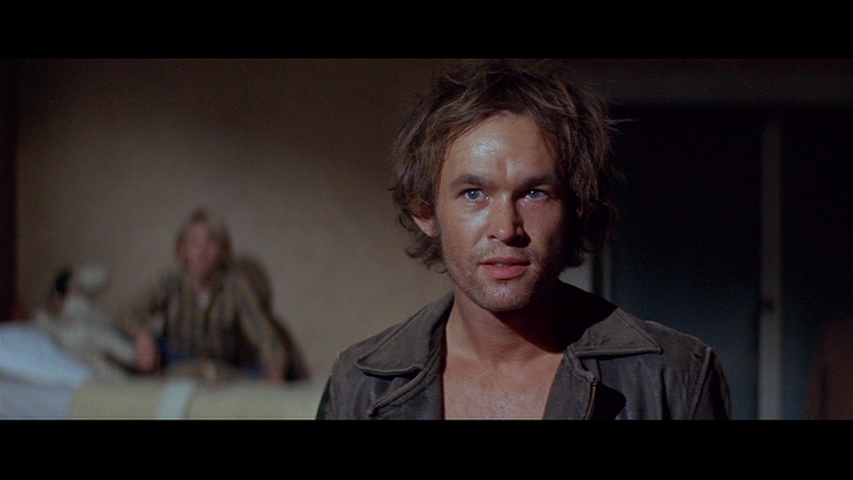
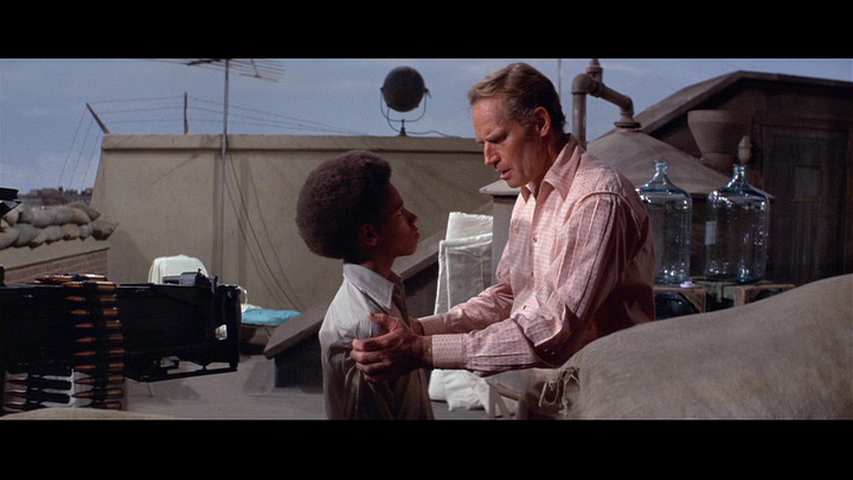 Eric Laneuville as Ritchie. Koslo is fine as the pragmatic Dutch, his leather jacket and motorcycle an obvious nod to his counterculture inclinations. Eric Laneuville as Ritchie is even stiffer than Cash, but maintains enough raw charm to develop a decent rapport with Heston. They have some cute exchanges - Ritchie: "You know something, Mister? You're hostile. You just don't belong." Neville: "Nice of you to let me hang around". Boris Segal's direction is effective. Aside from a few technical missteps (some really bad doubles during a motorcycle stunt, for one), the film is sleek and polished. The pacing of the film works a treat; just when things start to slow down a bit, the suspense ratchets right back up. For all the clunker lines given Cash, most of the script, by John and Joyce Corrington, is intelligent and nicely constructed. A good deal of the film's effectiveness is due to the wall-to-wall, catchy music by Ron Grainer, which really adds a lot of pathos and excitement to the film (the score is available on a highly-recommended CD release from Film Score Monthly). Grainer provided lots of memorable music for television during his career, including the definitive rendition of the Dr. Who theme and the title music to The Prisoner. The Omega Man is one of his few film scores, but it's a great one. (You can listen to a suite of his music for the film here) WARNING -- SPOILERS AHEAD! The ending of the film departs from the source material. In the book, the dying Neville realizes he is the "legend" of the title, the boogeyman of a new race that will succeed mankind on the Earth. The Omega Man ends on a similarly downbeat note, with a nearly-turned Lisa betraying Neville by letting Matthias and his followers into his apartment. As the Family destroy his home and his possessions, those symbols of the evil past, Neville grabs Lisa and flees, but he doesn't get far. Matthias escapes, unpunished, having thrown the fatal spear that kills Neville. Some may find the final shot, with its on-the-nose Christ-like imagery, obvious and ham-fisted. For me, it works as a poetic coda: Neville dies, but not without capturing some of his precious blood for Dutch to transform into serum, thus ensuring the continuation of the human race. 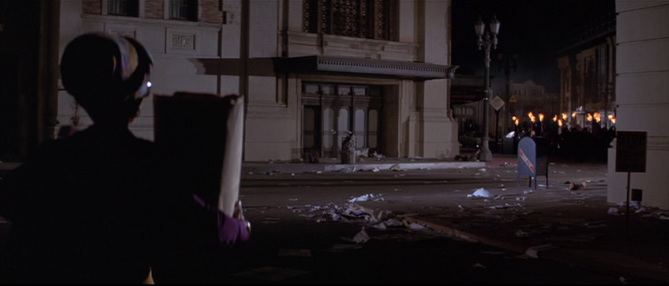 Despite some of its admittedly dated or silly trappings, The Omega Man still holds up. There are some real ideas at work here, and even if they are occasionally muddled or not fully worked through, they're enough to act as underpinnings to the surface action and thrills. The many scenes of an eerily deserted Los Angeles, the only occupants of the surrounding buildings, cars and cobwebbed rooms grotesque, moldering corpses, are images that have stuck with me ever since I first caught the movie on local TV in my early teens. I get the same kick out The Omega Man now that I did back then. I still find it a tremendously entertaining piece of work that surpasses whatever “cheese” aspect it may carry to deliver a big blast of fun, mixed with a dollop of 70s-era, thought-provoking seriousness. 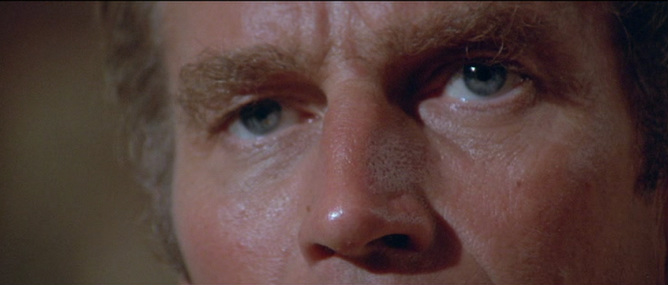 DVD Note: The Omega Man is readily available on a very nice DVD and an even better looking Blu-Ray.
1/14/2013 05:11:38 am
Given what he came to symbolise later in his life, it is fascinating how in the late 60s / early 70s Heston was often so effective playing rugged individuals and even renegades fighting against the system, rebelling against entrenched authority figures and patrician attitudes - one can see it very clearly in PLANET OF THE APES and SOYLENT GREEN especially but even in EARTHQUAKE - perhaps it is no wonder that they all have such downbeat endings! But then Heston, in his youth, was very much a Liberal who even marched with King. Like so many his views hardened as he got older - a shame. I think you are spot on Jeff in that this film, on its own terms, is the best of the adaptations of the book despite its departures from it.
Jeff
1/14/2013 11:42:10 am
That's a spot-on observation about Heston, Sergio! I agree completely. As you say, people tend to forget that he marched with Martin Luther King, Jr. back in the day.
I'm a fan of Heston's early work, loved him in BEN HUR and THE BIG COUNTRY and several other films. I hadn't seen THE OMEGA MAN in years but I do remember liking the first half and then giving up on the second half because of Cash's silly character. However I did enjoy reading your well thought out review, Richard. I always like seeing someone else's viewpoint on a film that I might not have liked as much. It can be eye-opening.
Jeff
1/15/2013 04:38:52 pm
Thanks for chiming in, Yvette!
I always liked Heston in PLANET OF THE APES. SOYLENT GREEN will be one of the most shocking moviegoing experiences of my teen days. Like those other movies, I saw THE OMEGA MAN in the theaters when it first came out. I was only ten! It deeply affected me moreso than the horrifying scenes of the mutants unmasking in BENEATH THE PLANET OF THE APES. Back then it was one of those movies I put in the "I'm glad I'm not there" category. There is an element of paranoia and unrelenting bleakness and futility that truly distrubed me as a kid. I was a fairly happy-go-lucky kid far removed from the deep bred cynicism I carry with me now. The uselessness of living in a world like THE OMEGA MAN was a true nightmare for someone of a sunny, blithly naive, disposition. It did it's job back then, that's for sure. I'd like to do a re-vieiwng to see what I'd pick up on now that 40+ years have passed.
Jeff
1/16/2013 11:30:53 am
Thanks for sharing your personal OMEGA MAN memories, John! It sounds like you haven't seen it since then...I'd be very curious to hear what you make of it now. It's flawed, but still powerful, I feel.
John
1/18/2013 12:08:47 am
Right. Duncan Jones, not Graham. All I could think of was - he's David Bowie's son, formerly known as Zowie. Didn't have time to do my Google check.
Excellent article Jeff, and a fine summation of this film's strengths and weaknesses. I wrote about it myself some time ago - http://livius1.wordpress.com/2011/12/12/the-omega-man/ - and I think we're broadly in agreement, although I was less impressed with Zerbe's performance. Anyway, the movie is a real favourite of mine and I need to pick up the Blu-ray.
Jeff
1/17/2013 03:50:12 pm
Cheers, Colin! Very nice write-up you did a few years back on OMEGA... I read your article and you're right, we are pretty much on the same page about the film. Glad to see you've got as much of a soft spot for it as I.
Jeff
1/18/2013 05:36:30 am
Hey John...thanks for the follow-up! I didn't mean to correct you re: Jones' first name...that wasn't my intention at all. Interesting (and not surprising) to hear that, about Chicago's trains being cleaned up for SOURCE CODE. I liked the audacious final leap that SOURCE CODE took, though MOON was more of a surprise to me, and had a lot more of that 70s atmosphere you mentioned. At any rate, Jones is a filmmaker to watch. 1/19/2013 02:35:56 am
Jeff, thanks for an excellent review of THE OMEGA MAN. I might have seen it a long time ago but can't say for sure. I have seen Heston's more popular films and I'd do well to take a look at some of the others in his portfolio, like SOYLENT GREEN and EARTHQUAKE. I can't help comparing Heston with Christopher Plummer: while they had little in common on screen, they both had a formidable screen presence.
Jeff
1/19/2013 03:37:59 pm
Thank you very much, Prashant! I definitely do hope you get a chance to watch THE OMEGA MAN and SOYLENT GREEN sometime...two very different but memorable dystopian sci-fi films.
Jeff
1/20/2013 08:13:43 pm
Thanks for checking in, Ruth! If you liked PLANET OF THE APES and SOYLENT GREEN, you should get a kick out of THE OMEGA MAN. And you're right - Heston was able to play those larger-than-life parts better than practically anybody, in my opinion.
Rod Croft
1/21/2013 07:23:58 am
Jeff
1/22/2013 10:49:39 am
Hi Rod! Thanks for your very thoughtful response. I think there is a very strong possibility that the nature of the plague and the mutating effects on the survivors being related to chemical warfare used during the Vietnam War was exactly what the screenwriters hard in mind. The specific connection to Agent Orange hadn't really occurred to me before; thanks for pointing that out. PErhaps you're right that had the Family been more "creature-fied" and monstrous in appearance it would have diluted the filmmakers' intent. I do think having more frightening enemies would have improved the THE OMEGA MAN's profile with younger movie fans today. 1/21/2013 08:36:13 pm
If you're looking for unsung performances by Heston, I seem to remember a pretty good downbeat western called "Will Penny"(?)
Jeff
1/22/2013 10:52:18 am
Hey Mike!
Jeff, I'm glad to see that your blog will now be part of the CMBA. You have a terrific blog!
Jeff
1/22/2013 10:58:52 am
Thank you very much, Patti, for the kind words and CMBA welcome! Glad to be aboard.
Jeff
1/22/2013 11:00:58 am
Thanks for that, Ruth! SOYLENT GREEN is a fabulous film but it's pretty grim, so I'm not surprised you don't give it a spin TOO often. Think you'll find THE OMEGA MAN to be more fun, though it too has its dark moments.
Jeff
1/25/2013 06:01:16 pm
Thanks, Ruth! I think you'll get a kick out of THE OMEGA MAN, despite the cheese factor. Chuck is on good form in it, and it should make a good contrast with Will Smith's I AM LEGEND if you've already seen that.
Neil
2/9/2013 10:15:12 pm
Dear Lord, was Chuck Heston ever young? : ) A great classic flick, with all of its B-movie trappings icing on the cake. Hammy acting? Check. Horrible movie props (like the half-inch thick spear point)? Check. Barely disguised stunt man half the age of Heston? Check. Abysmal dialog (pretty much everything Raosalind cash says)? Check. I love end of the world movies, and while I prefer the serious ones (well, not "The Road," that was a little TOO serious) there is plenty of room in my heart for the silly ones. I don't blame the producers for skipping the vampire antagonists of the novel, but with the family eschewing modern weapons it does make them an awfully weak nemesis. On a related note, I haven't seen "The Quiet Earth" since I watched it on VHS in the 80s, does it hold up?
Jeff
2/10/2013 02:51:35 pm
Hey, Neil, thanks a bunch for the comment!
Neil
3/6/2013 10:15:06 pm
Here is one end of the world movie that has sunk into the abyss (not without reasons) "Damnation Alley." Starring George Peppard, Jan Michael Vincent and Paul Winfield. It cost $17,000,000 US in 1976 dollars (which amazingly works out to $55,213,264.87 in 2012 dollars) and I have no idea where the money went. It certainly didn't go into the special effects budget! Based on a Roger Zelazny story (who hated the movie version) it has a 5.0 rating on IMDB.com and a 50% rating on Rotten Tomatoes. Still, if you are a fan of B-grade movies of the apocalyptic kind, it has its endearing qualities. I like the use of a Texas Instruments calculator duct-taped to the dashboard as a GPS computer. Oh, and this gem from IMDB.com: "The movie sat on the shelf at 20th Century Fox for some time after production was completed in 1976. Fox had high hopes for it on its release in 1977, expecting it to do better at the box office in comparison to Fox's other sci-fi release scheduled for that year... Star Wars." It might be pretty tough to track down, you can watch the whole thing on Youtube, I guarantee the low-quality won't make the experience any worse : )
Jeff
3/10/2013 11:31:49 am
Hey Neil!
Neil
4/16/2013 12:07:54 am
I finally watched "The Quiet Earth" again, I thought it was spectacular. When I first saw it I would have been just 14 or so, so I wouldn't have appreciated the thought put into it. Definitely my favorite "last men on Earth" flick. The acting was top-notch and there is a lot to think about within the movie. Once you watch it, read the comment one user posted on imdb.com, very interesting stuff indeed!
Jeff
12/5/2013 07:48:20 pm
Another of my all-time favorites. I first saw this in 1974 at a third run theater (or 4th possibly), back when movies ran for years - even after appearing on television. Before home video. I was six, but I still remember sitting there with my father. Mr. Heston became one of my favorite right there and then. Good review. You hit the nail on the head about a movie being a product of it's time. I often take a similar tack when reviewing books on Goodreads. A variation I use is to tell critics to look at how old an author was when he or she wrote the book that they're tearing apart as being dated. Where were they in their lives at the time? What was going on when the book was being written?
Jeff Flugel
12/12/2013 10:20:37 pm
Jeff, thanks a lot for this reply! You make a very good point about taking the background of the time a work was created into consideration. Interesting you bring up Spielberg, who also says he would now not include the classic scene of Indy shooting the swordsman in RAIDERS OF THE LOST ARK. Funny how Spielberg's greatest films were all made when he was fairly young. I totally get how he feels, being a new parent myself, and that speaks well of him as a human being. But I must confess to preferring the films the young, less sensitive Spielberg made. Certainly nothing he's made since E.T. has carried quite the same magic. Comments are closed.
|
Videophilia!
Opinionated ramblings about new and old movies (mostly old, as that's the way I like 'em!) 




Blogs of Note
Stuart Galbraith IV's World Cinema Paradise
Movie Morlocks (TCM's Classic Movie Blog) 50 Westerns from the 50s Riding the High Country Sweet Freedom Tipping My Fedora Thrilling Days of Yesteryear Silver Screenings Laura's Miscellaneous Musings Classic TV and Film Cafe Just a Cineast She Blogged By Night Chess, Comics, Crosswords, Books, Music, Cinema Out of the Past - A Classic Film Blog Pretty Sinister Books They Don't Make 'Em Like They Used To In So Many Words... Greenbriar Picture Shows Flix Chatter My Love of Old Hollywood Tales of the Easily Distracted Another Old Movie Blog Lasso the Movies Kevin's Movie Corner Films From Beyond the Time Barrier Carole & Co. Rupert Pupkin Speaks Caftan Woman Vienna's Classic Hollywood The Lady Eve's Reel Life ClassicBecky's Brain Food 





Hey!
Be sure to subscribe to the RSS feed below, to be informed of new postings! 



Categories
All

Archives
September 2015
|
 RSS Feed
