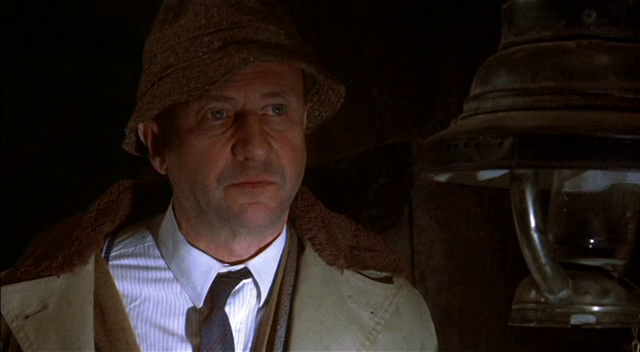
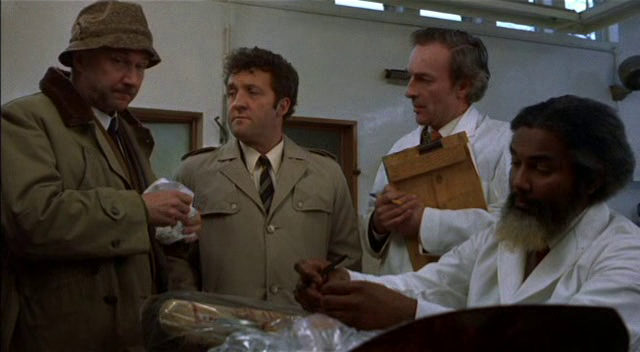
 A really unique, interesting, little-seen British horror film from the early 70s, Raw Meat (a.k.a. Death Line) sets an odd tone from the start, as we follow civil servant James Manfred (James Cossins) on a tour through the seedy London strip club scene. Manfred eventually descends down into the Russell Square tube station. A short while later, two student lovers, surly American Alex (David Ladd) and sweet English beauty Patricia (Sharon Gurney), exit the last train onto the platform and come across Manfred's body lying comatose on the steps. David assumes the man's a drunk and wants to leave him be ("Back home we just step over these people"), but kind-hearted Patricia wants to help him. Thinking he might be a diabetic, Patricia has Alex search the man's wallet for a health card. After cursorily scanning the man's I.D. ("James Manfred, O.B.E."), the couple head up to ground level in search of help. A reluctant Alex returns below with a local bobby, only to find Manfred's body has disappeared.  Sharon Gurney and David Ladd The case comes to the attention of acerbic, tea-guzzling Inspector Calhoun (played with immense relish by Donald Pleasence), who remembers some other recent cases of people going missing in the same tube station. He sends amused, long-suffering Detective Sergeant Rogers (Norman Rossington) to fetch Alex to "assist with police enquiries." The two coppers begin to poke into Manfred's disappearance, Calhoun cheekily breaking into the missing man's flat and helping himself to his whiskey. Christopher Lee (in a delightfully snide, all-too-brief cameo) shows up as the mysterious Man from the Ministry, Stratton-Villiers, who icily warns them to leave the Manfred case alone. 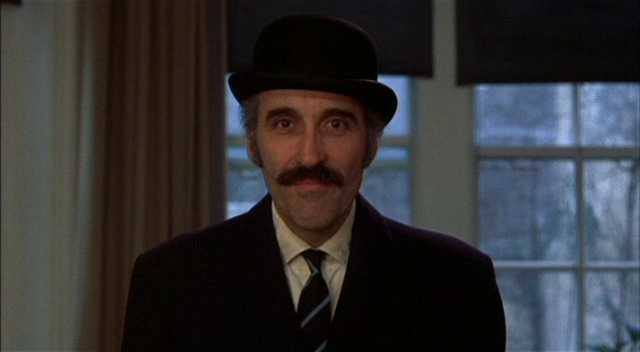
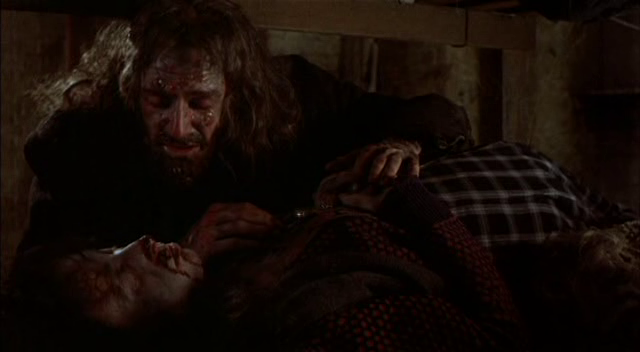
Then, in a bravura sequence (courtesy of director Gary Sherman and cinematographer Alex Thomson), we're shown exactly what has happened to Manfred. In a masterful example of visual storytelling, the camera creeps down into the bowels of the Underground, and - to the constant sound of dripping water - does a long, slow pan around a subterranean charnel house, with corpses in various states of butchery hanging from the walls, the pallid, unconscious body of Manfred slumped in a corner. 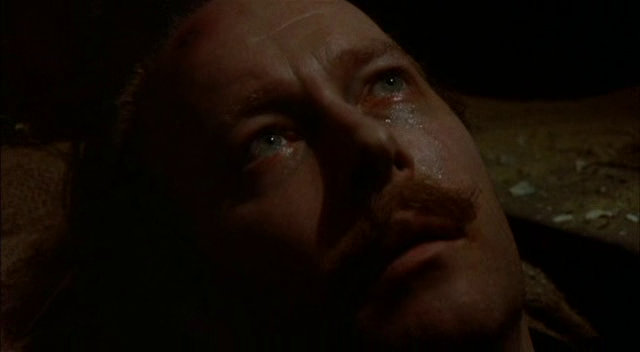 This is the lair of "the Man" (Hugh Armstrong) and his dying, pregnant "Woman" (June Turner), the last descendants of subway workers buried in a rock slide in the 1880s and forgotten by a callous government. The Man and Woman are a sorry lot, riddled with open sores, malnutrition, plague and anemia. They're also cannibals, and James Manfred O.B.E. is the next item on the menu. It's a grisly scene rendered poignant by the Man's clear distress over his mate's deteriorating condition. The camera then pulls out of their fetid chamber to the abandoned station site and it's walled-in entrance, as the soundtrack swells with an audio flashback of the original work crew being buried alive.
The death of his mate and their unborn child sends the grief-stricken Man on a rampage, as he violently dispatches three subway workers. Alex and Patricia get pulled back into the case when the couple are returning home after a night out. Patricia forgets her books in the train, Alex dashes back in to get them but the train doors shut before he can get back out. No sooner has Patricia cheerfully waved goodbye then a large, scabby hand closes over her mouth. Frustrated by the lack of action by Calhoun and Rogers, a worried Alex must take matters into his own hands and descend into the Man's lair before Patricia becomes the murderous, miserable wretch's next mate... 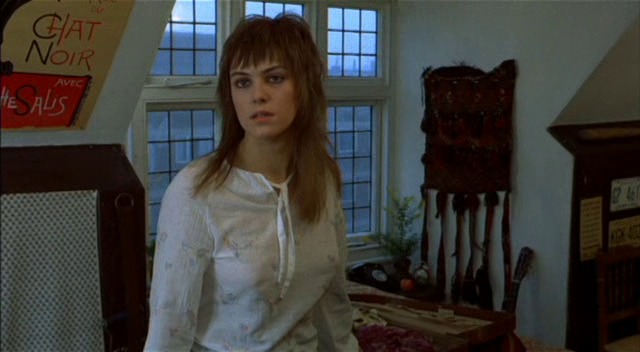 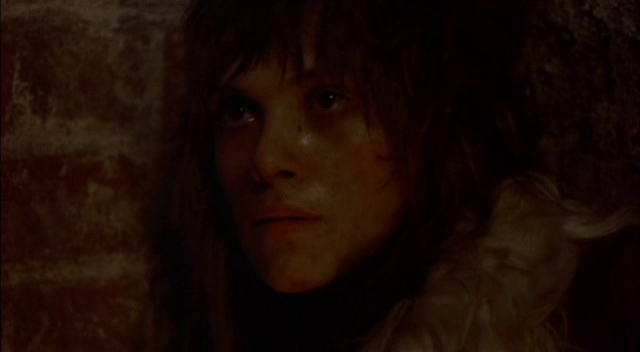 While the Man becomes less of a monster and more of a pathetic, pitiable remnant of a terrible tragedy, taking away some of the scare factor, the movie compensates with a very witty screenplay and a fine eye for gross, grotty detail. Pleasence gets one of the best roles of his career as the eccentric, barb-tongued inspector, and he plays it for all its worth. The scene where he trades verbal jabs with Lee is terrific. 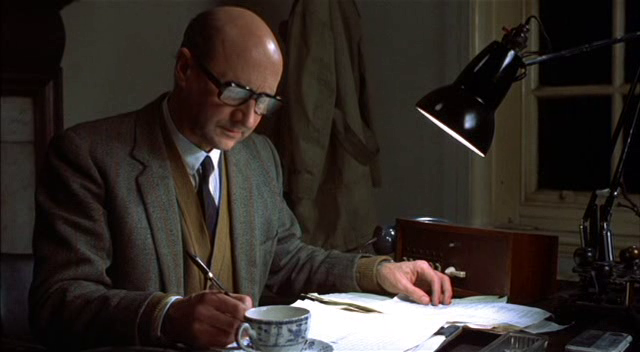 The droll humor is juxtaposed with the sad, horrific depiction of the Man's miserable existence and the discomfort his appetites instill in the viewer. Despite his killing and eating unlucky subway passengers, the Man emerges as figure of true sorrow and pity, and (aside from Patricia) is the most sympathetic character in the film, more so than reluctant hero Alex, or indeed the apathetic Calhoun, seemingly more interested in claiming his patch over the Home Office than in the human remains of this tragedy. Alex's desperate concern and frantic search for his missing girlfriend finally brings us grudgingly on his side by movie's end. 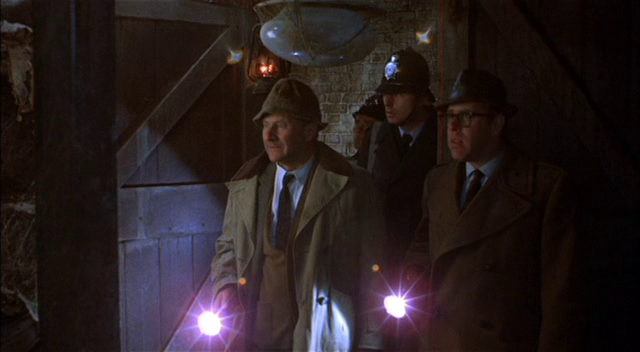 Raw Meat is a queasy, discomfiting sort of film, a typically grungy and deglamorized 70s vision of the world, with some pointed observations on Britain's class divide. Its grim subject matter is leavened by a sharp sense of humor and the extreme prettiness of Sharon Gurney, whose last film this was (apparently retiring soon after at the tender age of 23 to raise a family). She gives a sensitive portrayal here, easily outshining her rather bland but competent co-star, Ladd. 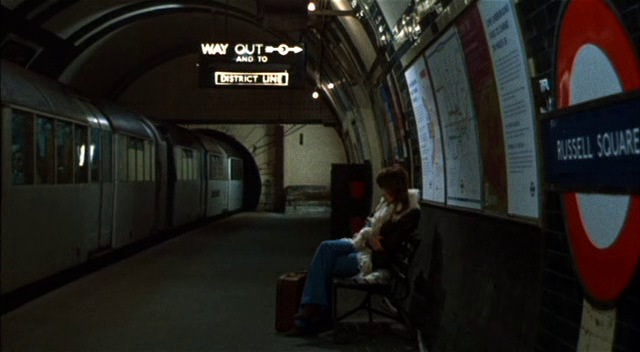 Top acting honors of course go to Pleasence (I'd pay good money to see further adventures featuring Inspector Calhoun and company) and Hugh Armstrong, who totally commits to the role of the Man. It's the sight of his shuffling, mournful figure, incessantly shouting "Mind the doors" (the only English he knows, heard constantly throughout his life amid the tube tunnels), that remains etched in one's mind. A special treat for fans of British horror, Raw Meat deserves to be more widely seen, and I recommend it highly to the less squeamish out there, looking for something offbeat and original in the horror genre. 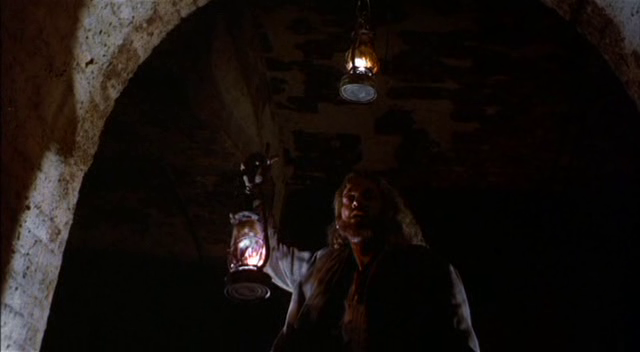
Gary
5/5/2013 10:47:18 pm
No comments on this one? It's one of my favourite horror movies, although one could probably argue about what genre it really is. The closest to it in terms of style is AMERICAN WEREWOLF IN LONDON, in that it zig-zags between laugh out loud moments and viscerally unpleasant horror. This does give the movie a rather more realistic tone than many movies, in that we are shown 'real life' going on at the same time as the more fantastic elements, At one point we see Pleasance and Rossington going to the pub and ending up completely soused, finally being thrown out by the landlord when they try to stay after closing time. There is no real reason for the scene to be there,but it's gloriously funny.
Jeff
5/6/2013 10:36:38 pm
I very much appreciate you taking the time to comment, Gary! I was a little surprised that this fine little gem of a Brit horror film hadn't got any responses before. I'm glad you brought up that scene in the pub. I love how the landlord tries to escort Calhoun and his sergeant out at closing time, but Calhoun's having none of it. As you say, it's an unnecessary scene as far as the story goes, but it's a delightful one and shows another, more anarchic side to Calhoun's character. Comments are closed.
|
Videophilia!
Opinionated ramblings about new and old movies (mostly old, as that's the way I like 'em!) 








Blogs of Note
Stuart Galbraith IV's World Cinema Paradise
Movie Morlocks (TCM's Classic Movie Blog) 50 Westerns from the 50s Riding the High Country Sweet Freedom Tipping My Fedora Thrilling Days of Yesteryear Silver Screenings Laura's Miscellaneous Musings Classic TV and Film Cafe Just a Cineast She Blogged By Night Chess, Comics, Crosswords, Books, Music, Cinema Out of the Past - A Classic Film Blog Pretty Sinister Books They Don't Make 'Em Like They Used To In So Many Words... Greenbriar Picture Shows Flix Chatter My Love of Old Hollywood Tales of the Easily Distracted Another Old Movie Blog Lasso the Movies Kevin's Movie Corner Films From Beyond the Time Barrier Carole & Co. Rupert Pupkin Speaks Caftan Woman Vienna's Classic Hollywood The Lady Eve's Reel Life ClassicBecky's Brain Food 







Hey!
Be sure to subscribe to the RSS feed below, to be informed of new postings! 




Categories
All


Archives
September 2015



|
 RSS Feed
